Cocciopesto, two thousand years later: tested for slip and damp
RESEARCH ON COCCIOPESTO, AN ANCIENT ROMAN TECHNIQUE
In brief: The Romans made cocciopesto from crushed terracotta, lime and volcanic ash: a waterproof, breathable mortar for baths, cisterns and floors. We are refining it into a contemporary surface that uses less cement, and testing its slip and moisture resistance; it already shapes the Stratigrafica collection.
Tim Ingold, in Making (2013), describes making as a correspondence with materials rather than the imposition of a form on them: whoever makes follows what the material does. Cocciopesto is a good case. Its recipe has been written down for two thousand years, yet every batch behaves differently, and the trowel has to listen to it.
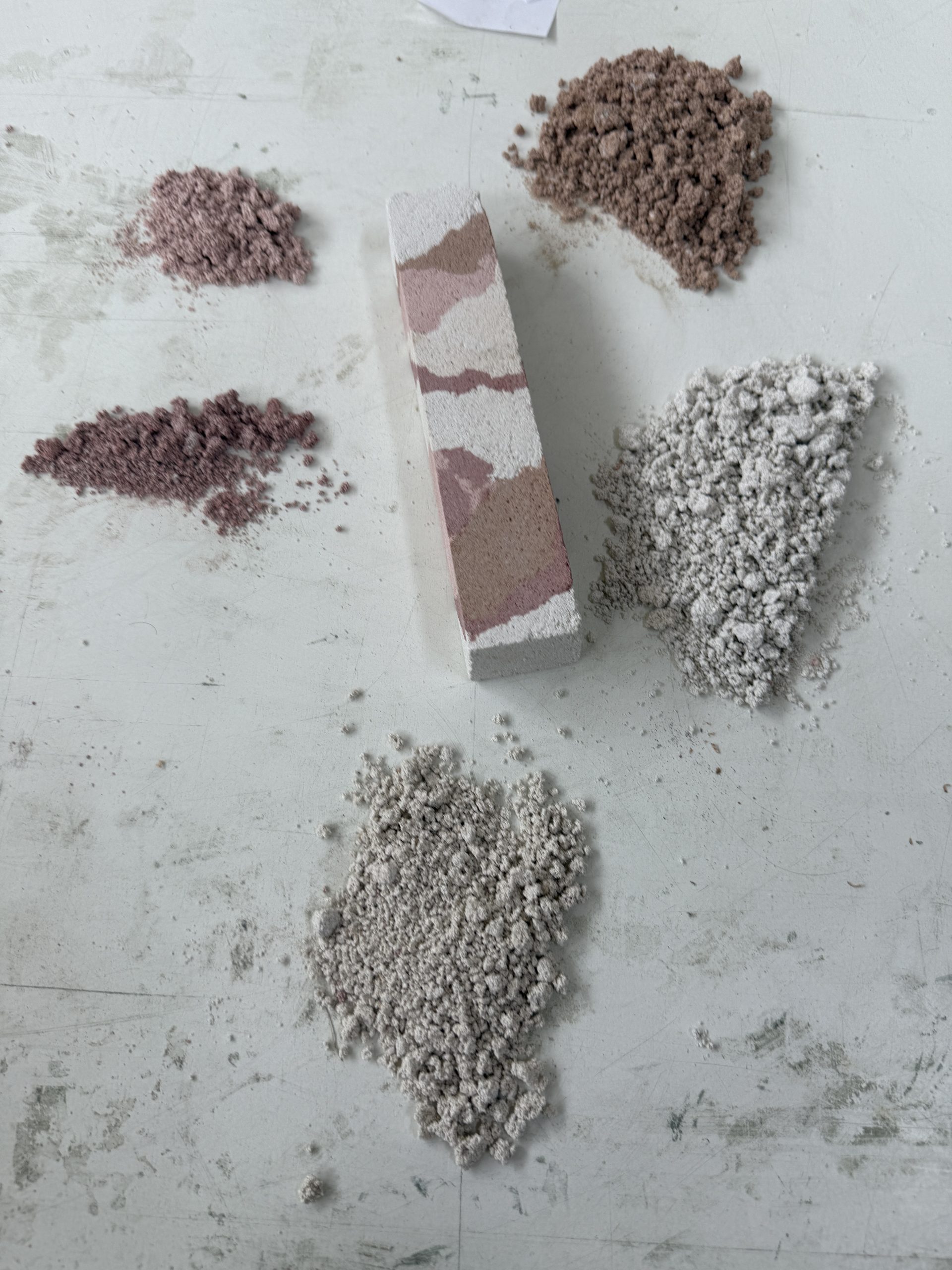
Shards. Originating in ancient Rome as a waterproof, breathable mortar made from crushed terracotta (testae), lime and pozzolans for baths, cisterns and pavements, cocciopesto offers a robust precedent.
Lime. Recent research supports the interest in lime. In 2023 a team led by MIT found that the white lime clasts in Roman concrete, long dismissed as a sign of careless mixing, act as reservoirs of calcium that can seal cracks, a property linked to mixing with quicklime at high temperature.
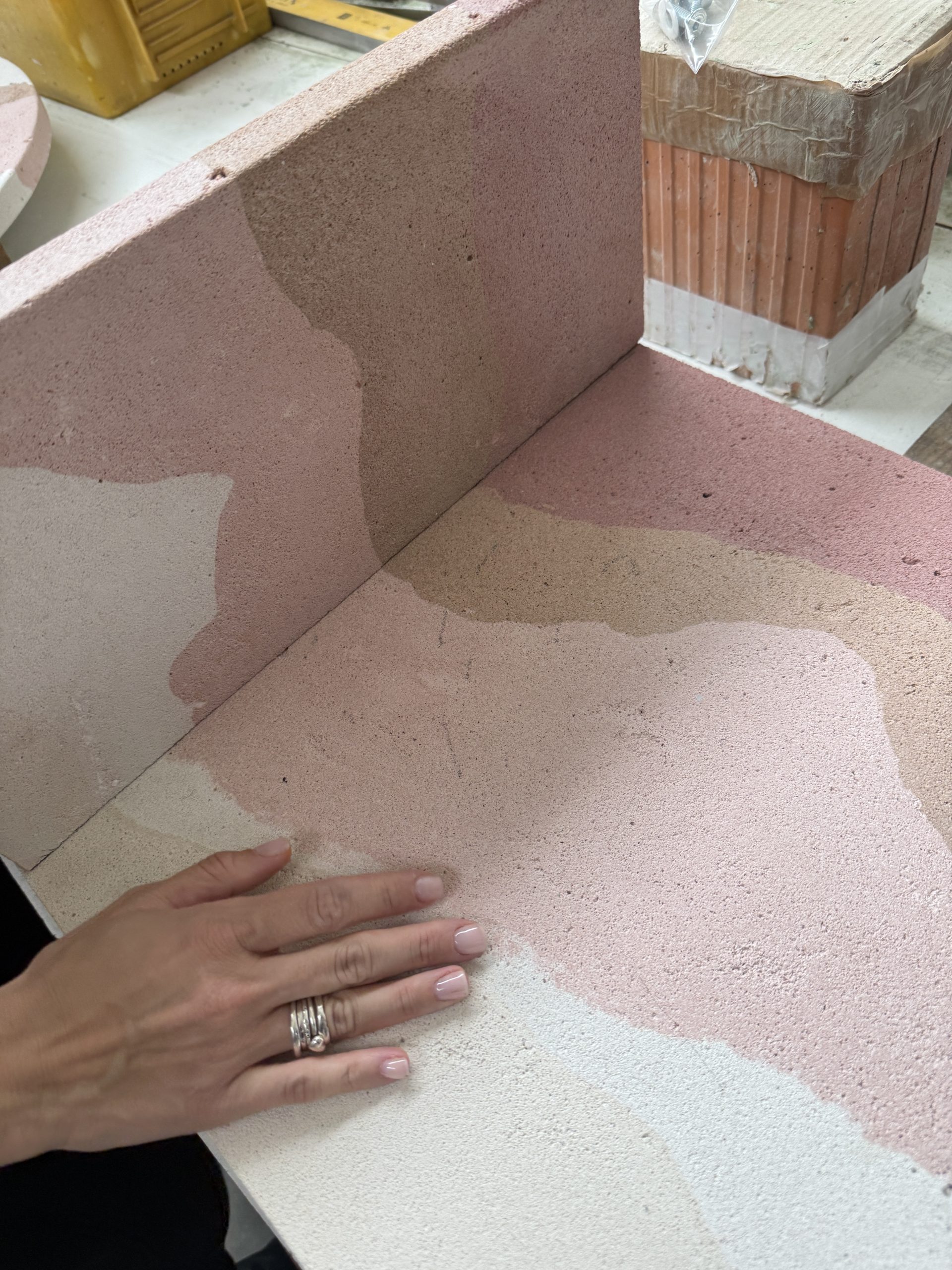
Time. Our research refines aggregate grading and lime–pozzolan ratios, controls curing, and standardises trowel techniques to deliver dense, repairable surfaces; slip resistance and moisture tolerance are being tested before the finish is specified for interiors. The result carries historical continuity and translates Roman durability into current interiors and stratified surfaces (Stratigrafica) without sacrificing precision or aesthetics.
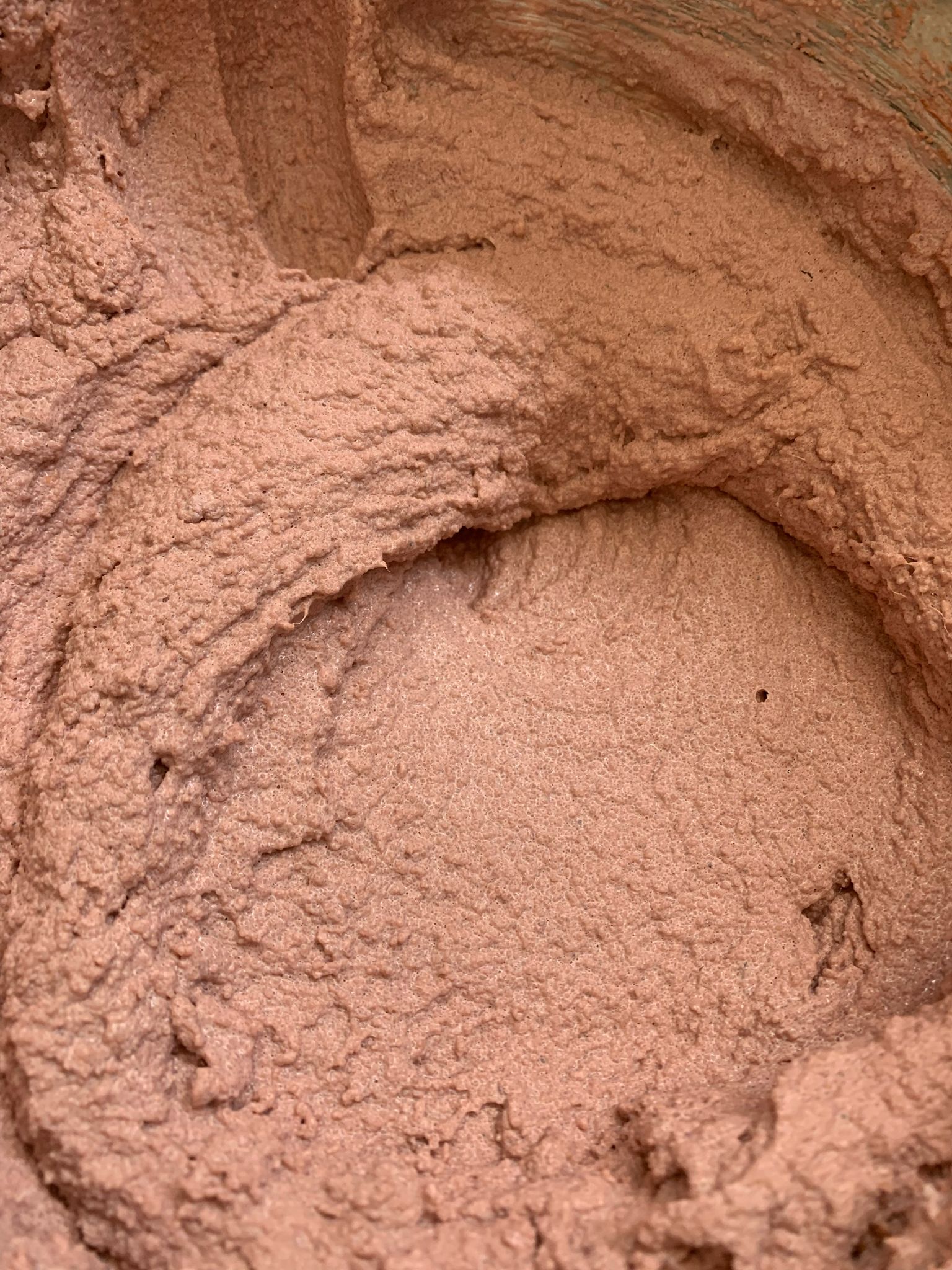
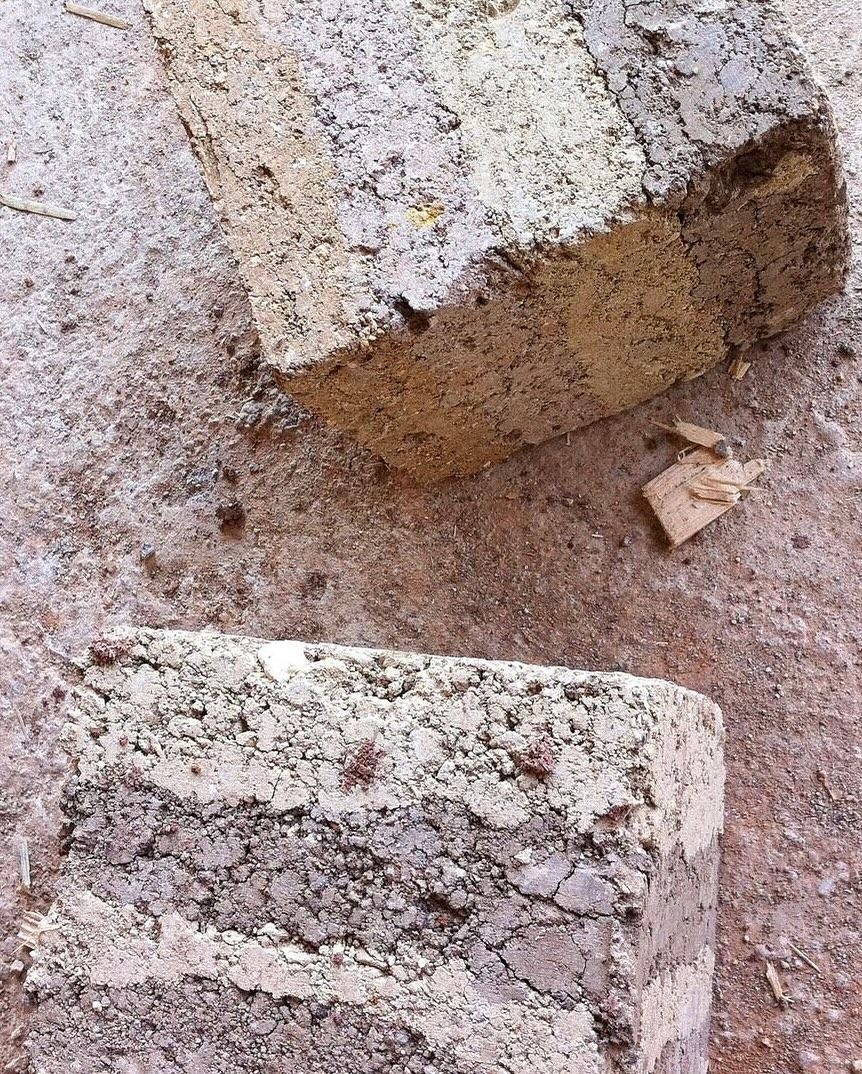
Image: working with cocciopesto. Layered application and controlled trowel finishes produce a refined, stratified texture aligned with the Stratigrafica approach.
SOURCES