Kinetic colour without a moving part
Photo Credits: Public Works by Cosmos. Elena Pelosi Studio
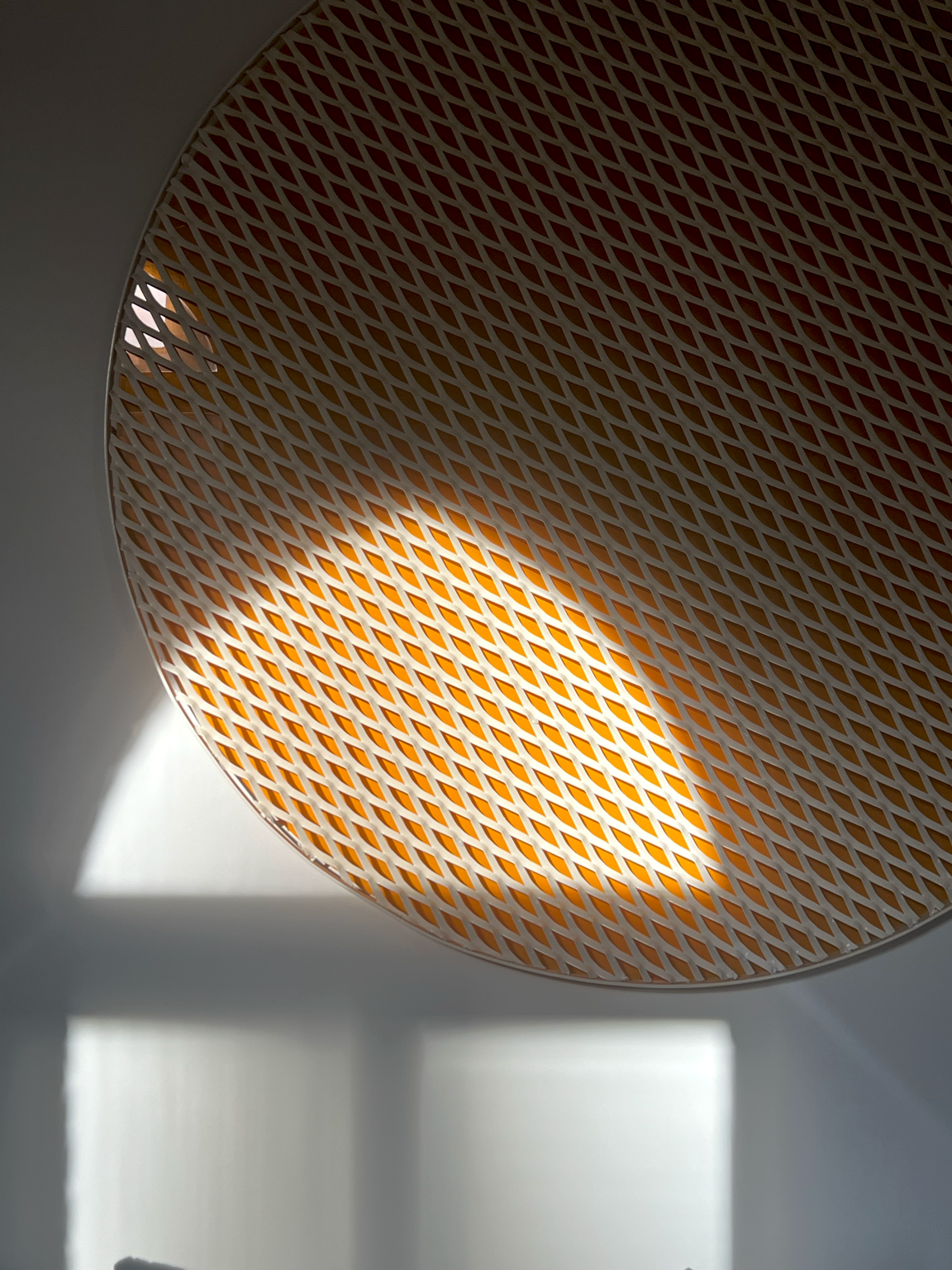
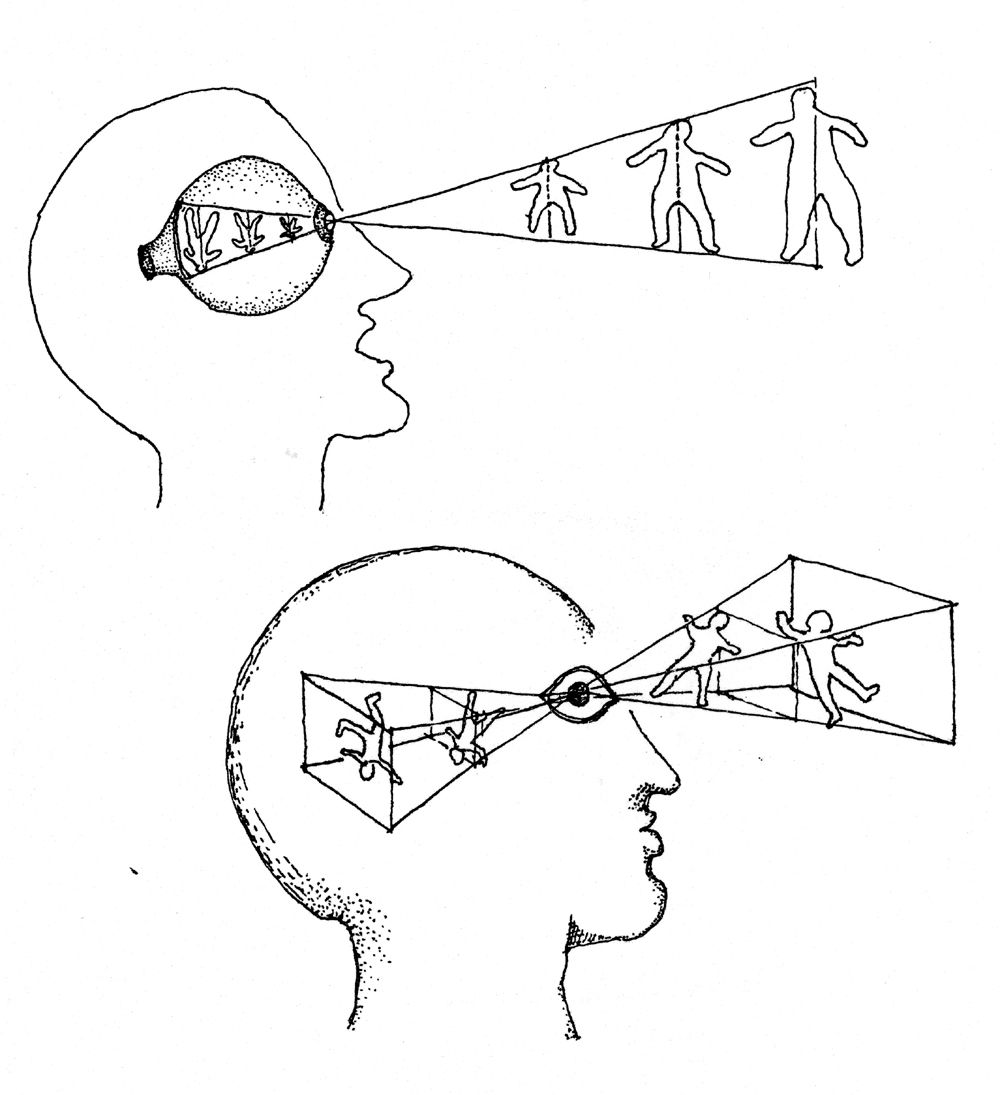
INVESTIGATING THE MECHANICS OF OPTICAL PERCEPTION
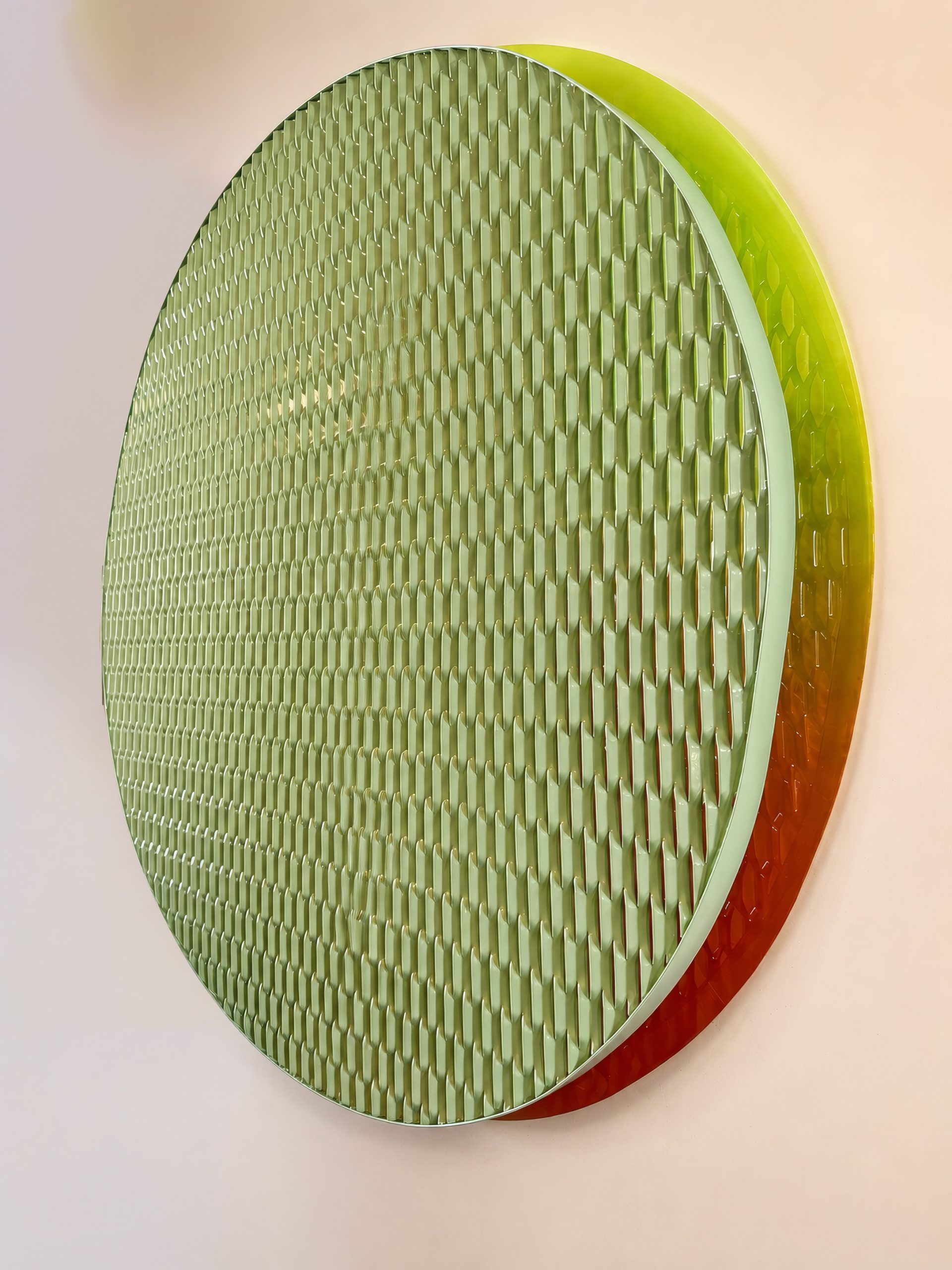
In brief: A coloured mesh over plexiglass does not move, yet its colour changes as you walk past it. In Sun we use parallax, shadow and transparent layers to make colour kinetic without a single moving part: the viewer’s movement completes the work.
Carlos Cruz-Diez spent sixty years on the same intuition: colour is not a property of things but an event that happens between the object, the light and the eye. His Physichromies, begun in 1959, change as the viewer walks past them. Sun and Peripheral Visions start from the same place: a still object that only exists completely when someone moves.
Look. Here we investigate the mechanics of optical perception and the physical behaviour of light through layered materials. Using a geometric composition of coloured mesh set over a plexiglass substrate, “Sun” functions as a static object that requires the viewer’s movement to be fully activated.
Move. The work maps how reality shifts depending on perspective: from the left vantage point, the eye captures the opaque surface reality of the material—the solid, isolated colour of the mesh. As the viewer shifts to the right, the perception deepens into optical mixing.
See. With Sun we saw how parallax, shadow projection and transparent layering can generate a kinetic colour experience without mechanical parts, transforming passive observation into an active spatial dialogue.
The work belongs to a lineage in which the viewer’s movement completes the image: in 1959 Gruppo T was founded in Milan, and in 1962 Olivetti presented Arte programmata, the exhibition of kinetic and programmed art curated by Bruno Munari and Giorgio Soavi, with a text by Umberto Eco.
SOURCES