How can heterogeneous clays be fired to form stable, landscape-like surfaces?
TEXTURE RESEARCH THROUGH CLAY FUSION
In brief: Heterogeneous clays can form stable, landscape-like surfaces when soils from different places are layered over a refractory base of red, white and black clays and fired several times at calibrated temperatures, so that partial melting is recorded rather than prevented. This is the method behind Melting Pot.
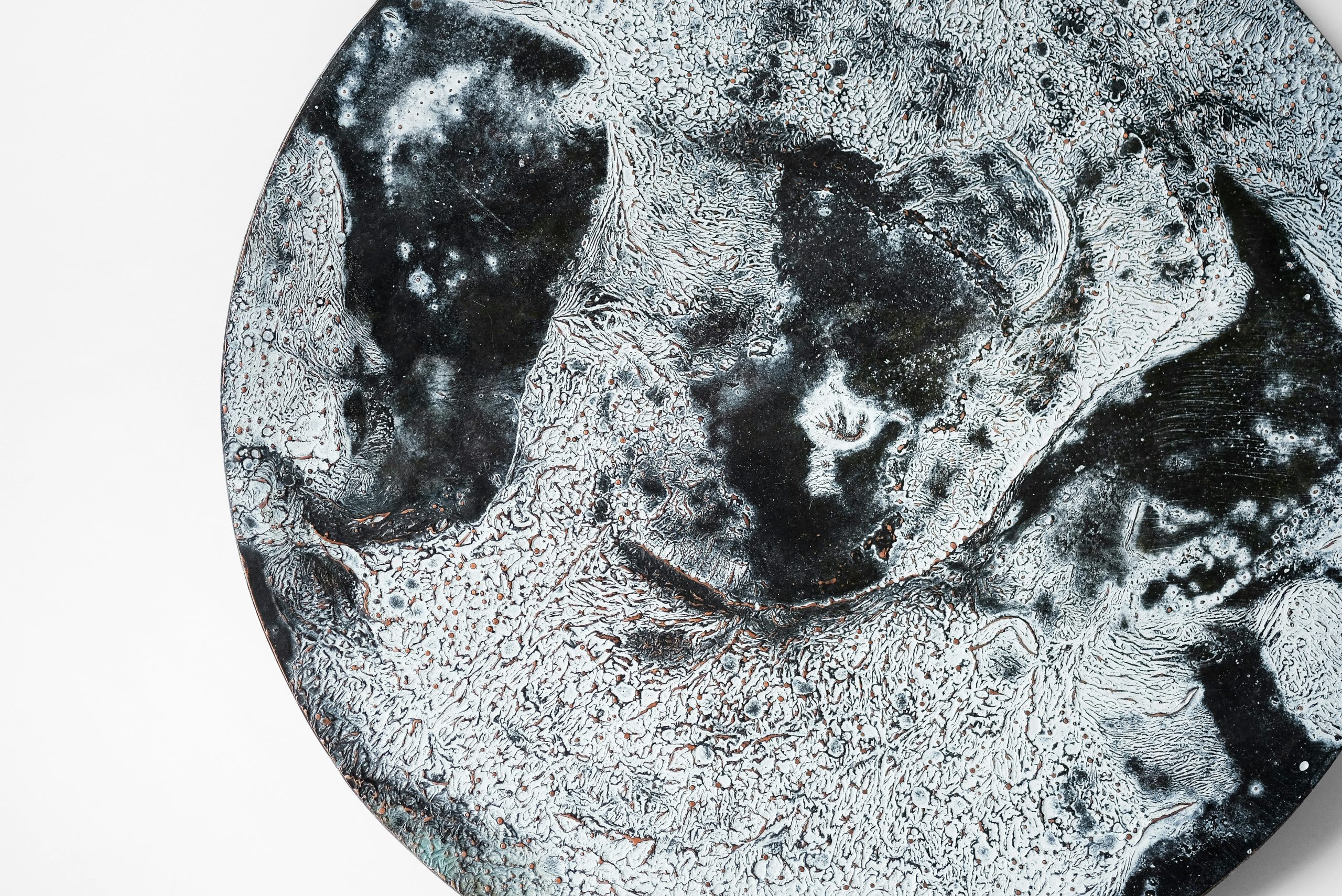
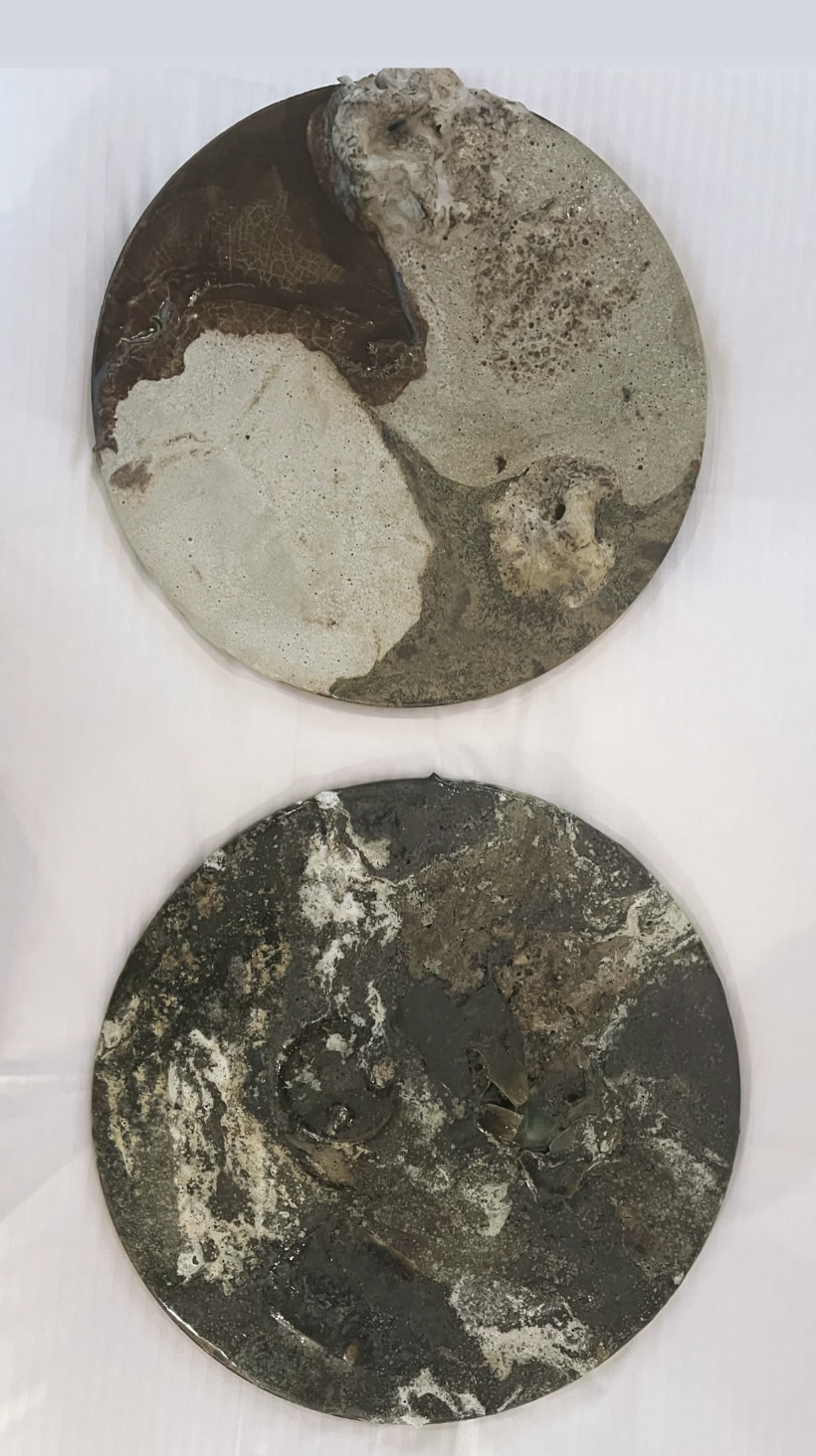
Melting Pot is a research-led exploration of hybridity in matter. A refractory base is built from red, white and black clays; soils collected from different places are layered and coated, then subjected to multiple high-temperature firings at calibrated peaks and soaks.
At specific thresholds, flux differentials drive partial melting: edges slump, droplets form, and micro-cracks open where shrinkage rates diverge. The resulting surface records interaction rather than finish—flow lines, pooled glass, and fracture networks that are mapped against composition and firing curve.