How can static materials be structured to create a dynamic perception of colour and light, depending on the viewer’s perspective?
INVESTIGATING THE MECHANICS OF OPTICAL PERCEPTION
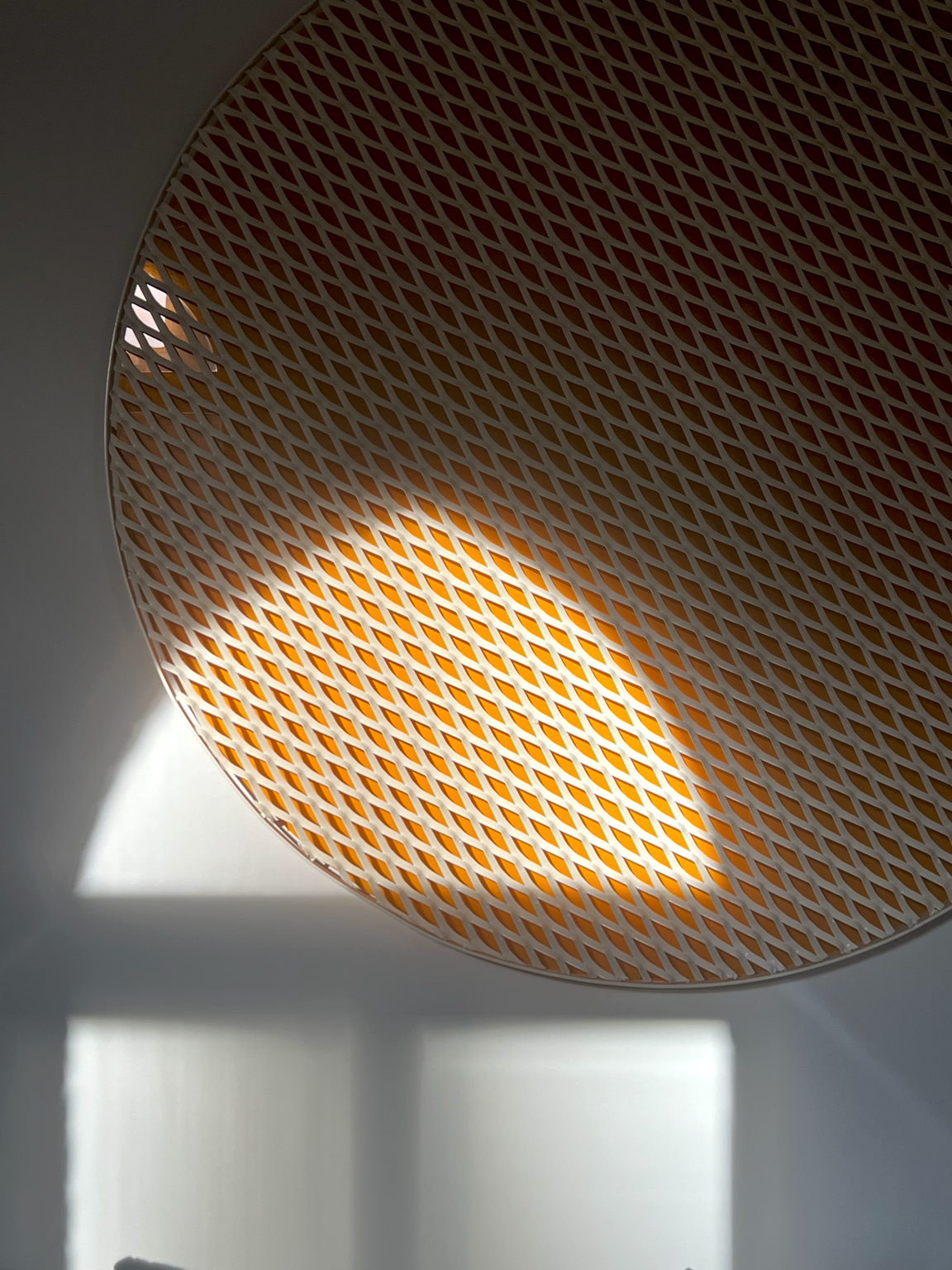
In brief: Static materials can produce a dynamic perception of colour when they are layered so that the viewer’s movement completes the work. In “Sun”, coloured mesh set over plexiglass uses parallax, shadow projection and transparency to generate kinetic colour without mechanical parts.
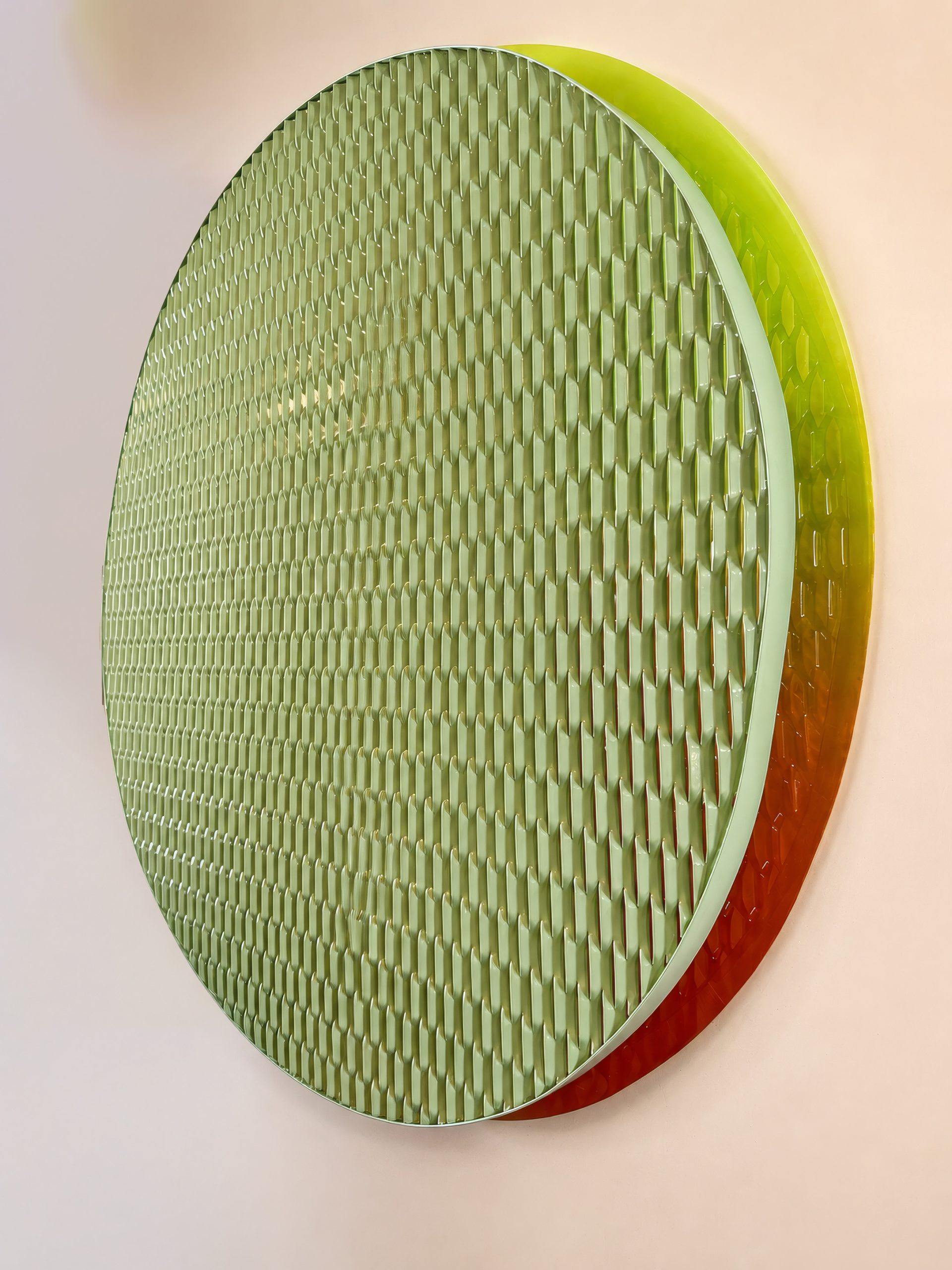
This study investigates the mechanics of optical perception and the physical behaviour of light through layered materials. Using a geometric composition of coloured mesh set over a plexiglass substrate, “Sun” functions as a static object that requires the viewer’s movement to be fully activated.
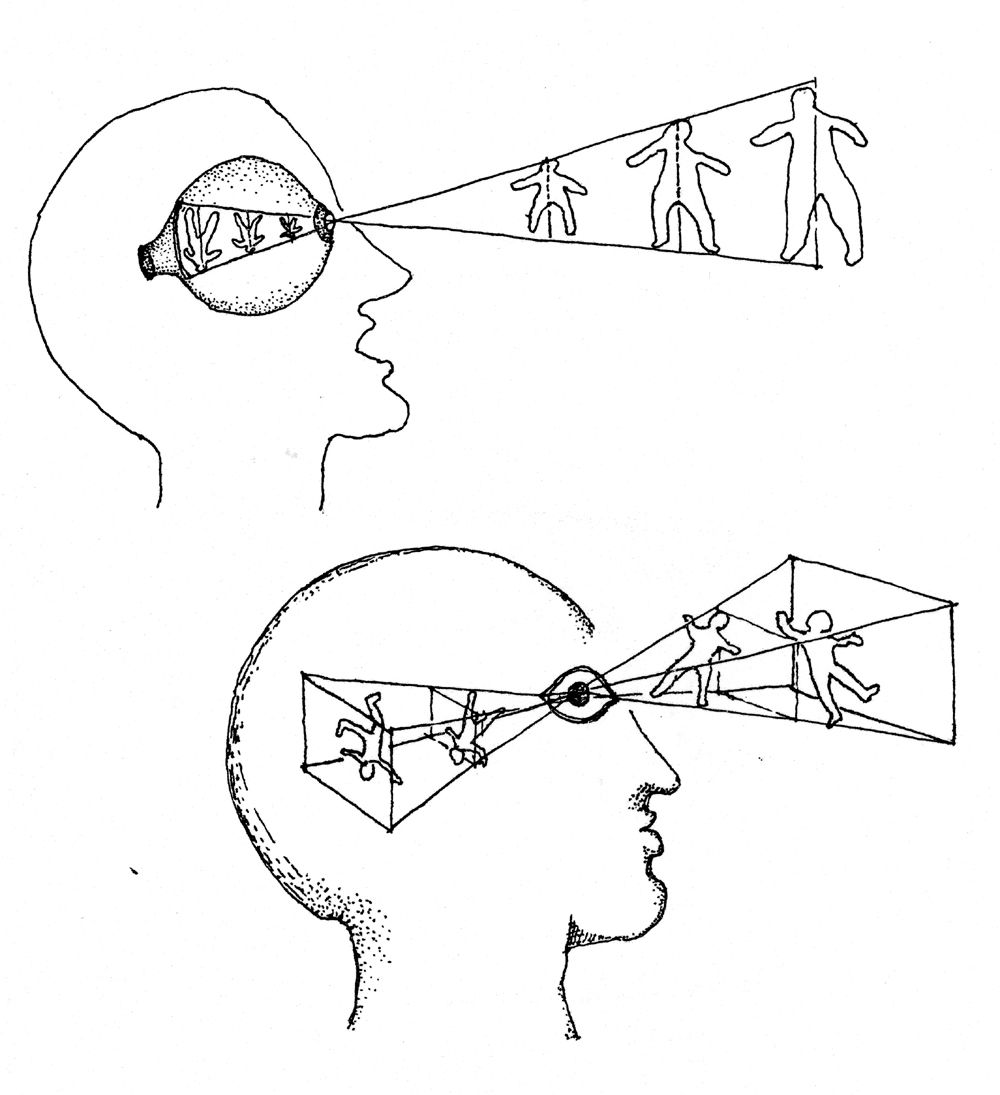
The work maps how reality shifts depending on perspective: from the left vantage point, the eye captures the opaque surface reality of the material—the solid, isolated colour of the mesh. As the viewer shifts to the right, the perception deepens into optical mixing.
The research shows how parallax, shadow projection and transparent layering can generate a kinetic colour experience without mechanical parts, transforming passive observation into an active spatial dialogue.
The work belongs to a lineage in which the viewer’s movement completes the image: Carlos Cruz-Diez began his Physichromies in 1959, the year Gruppo T was founded in Milan, and in 1962 Olivetti presented Arte programmata, the exhibition of kinetic and programmed art curated by Bruno Munari and Giorgio Soavi, with a text by Umberto Eco.
SOURCES